
Celebrity Culture Changed. And It Quietly Rewrote the Rules of Brand Marketing.
For decades, celebrity culture was built on distance.
Celebrities were designed to feel untouchable. Polished. Aspirational. Carefully controlled. Every interview was managed, every image curated, every public appearance part of a carefully constructed narrative.
You admired them from afar.
But you rarely felt like you knew them.
That distance was the point. Aspirational marketing worked because celebrities represented a version of life most people could only imagine. Brands borrowed that same dynamic, placing their products alongside idealised lifestyles and perfectly staged imagery.
For a long time, that formula worked.
Then social media arrived and quietly rewrote the rules.
The Shift From Aspirational to Relatable
Platforms like Instagram, TikTok and YouTube collapsed the distance between public figures and everyday people.
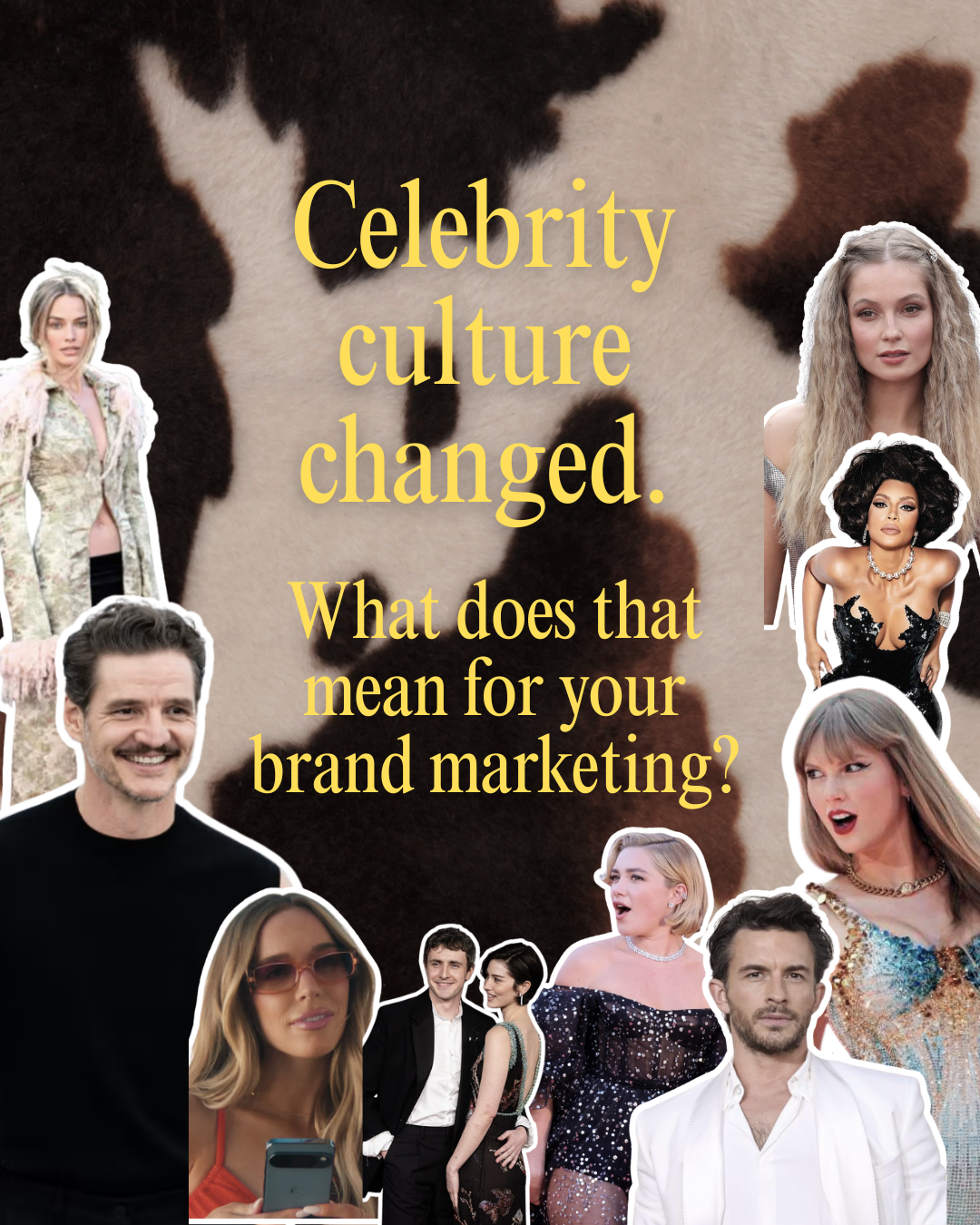
Celebrity culture changed - what does that mean for your brand marketing?
Suddenly celebrities weren’t only appearing on magazine covers or red carpets. They were showing up in the same digital spaces as everyone else, sharing moments from their daily lives, speaking directly to audiences and participating in the same online conversations as creators and fans.
And something interesting happened.
The celebrities who resonated most online weren’t necessarily the most polished or traditionally aspirational. They were the ones who felt the most human.
Think about the moments that actually travel online.
Florence Pugh casually cooking pasta on Instagram while chatting to followers.
Pedro Pascal laughing his way through interviews and becoming the internet’s favourite meme.
Paul Mescal being photographed walking around in GAA shorts and trainers, looking more like someone you might pass on the street than a Hollywood actor.
None of these moments are aspirational in the traditional sense.
But all of them are engaging.
Because they feel real.
The Same Shift Is Happening in Brand Marketing
The implications of this cultural shift extend far beyond celebrity culture.
Today, brand content doesn’t exist in isolation. It appears in the exact same feed as creators, influencers, celebrities and your friends sharing moments from their everyday lives.
That context changes everything.
Your audience isn’t opening a magazine specifically to look at advertising anymore. They are scrolling through a constant stream of human content, and your brand appears within it.
Which means the traditional rules of polished, highly produced marketing often feel out of place.
In many cases, overly perfect brand content now creates distance rather than desire.
Audiences don’t want to feel like they’re being sold to.
They want to feel like they’re connecting.
And the data increasingly supports this shift.
Research from Nielsen shows that 92% of consumers trust recommendations from individuals over brands.
Stackla found that user-generated content is considered 2.4 times more authentic than brand-created content, while 86% of consumers say authenticity plays a role in which brands they support.
Even major platforms have acknowledged the shift. Meta has repeatedly reported that ads designed to resemble organic social content often outperform traditional, highly polished creative in both engagement and conversion.
In other words, perfection is no longer the signal of quality it once was.
In many cases, it creates distance.
Why Human Brands Are Winning
This doesn’t mean production quality is irrelevant, or that brands should abandon craft.
But it does mean the emotional tone of marketing is changing.
The brands gaining traction today don’t simply look good.
They feel human.
They have a point of view.
They show personality.
They interact with their audience rather than broadcasting at them.
You can often see this in the way founders show up in their own brand content, the way brands participate in cultural conversations or the way social teams allow humour, spontaneity and imperfection to appear in their work.
In a feed full of people, brands that behave like people have a structural advantage.
Because audiences respond to signals of humanity.
A Simple Test for Your Brand
If your brand disappeared tomorrow and was replaced by another account in your category, would anyone notice the difference?
Or would the content feel largely interchangeable?
A useful exercise is to look at your brand’s content and ask a few simple questions.
From your posts, can people identify:
your personality
your humour
your opinions
If the answer is no, the brand likely still sounds like a company rather than a person.
And in today’s social environment, that difference matters more than ever.
Because the most effective marketing no longer behaves like advertising.
It behaves like culture.
